Timings : Monday - Friday: 06.00 pm - 09.00 pm
94868 75128



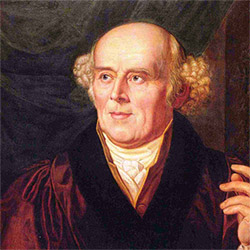
Homeo – Like or Similar and Pathos – suffers, which means the disease force can be cured by the similar, slightly stronger medicinal force
Homoeopathy was discovered by the German Physician named Dr. Christian Friedrich Samuel Hahnemann (10th April 1755 – 2nd July 1843) in the era of 18th century (1796). According to Historical sculpture, homoeopathy was originated around 400 BC i.e. at the time Hippocrates, the father of Medicine. Homoeopathy encircled with the vital principle “Similia Similibus Curantur” which means “likes are cured by likes”, i.e., "what makes the man ill, also cures him".
Dr. Christian Friedrich Samuel Hahnemann who was MD graduate from University of Erlangen, was practising the medicine for few years. During these periods, he was not satisfied in his method of treatment since it was giving more pain to the patient. So he left from the school of medicine and become Medical & Scientific Translator. During his translation of the book “Cullen’s Materia Medica”, he encountered that Cinchona, the bark of Peruvian Tree was effective in curing Malaria and also it has the efficacy to produce Malaria in healthy human beings. Immediately he started research on cinchona and he proved the same thing by taking the substance by himself and also to the healthy human beings. Fortunately, the results were as expected and he concluded that “the substance which has efficacy to produce the disease in healthy individuals, can treat the similar set of disease manifesting in the sick individual”. And he formed the law “Similia, Similibus, Curantur” and he named the system as Homoeopathy.
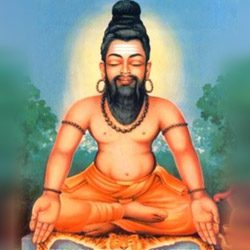
Siddha is a traditional & ancient system of medicine originated at Dravidan culture(Tamil Nadu, India). It was first described by the Lord Shiva to his wife Parvathi. All the knowledge about this system of the medicine is explained to Lord Muruga(son of Parvathi & Lord Shiva) by Parvathi. He taught all these knowledge to his sage Agasthya(father of Siddha Medicine). Agasthya spread all these knowledge to the human beings through 18 siddhars.
Siddha was foucssed in 8 supernaturals powers called “Ashtamasiddhi”, and those who attained these powers they are called “Siddhars”. These siddhars wrote their knowledge in palm leaf manuscripts. Only fragment parts of the manuscripts are found in South India but kept them solely for their own uses.
According to the Siddha medicine, various psychological and physiological functions of the body are attributed to the combination of seven elements: first is ooneer (plasma) responsible for growth, development and nourishment; second is cheneer (blood) responsible for nourishing muscles, imparting colour and improving intellect; the third is oon (muscle) responsible for shape of the body; fourth is koluppu/Kozhuppu (fatty tissue) responsible for oil balance and lubricating joints; fifth is elumbu (bone) responsible for body structure and posture and movement; sixth is elumbumajjai (bone marrow) responsible for formation of blood corpuscles; and the last is sukkilam (semen) responsible for reproduction. Like in Ayurveda, in Siddha medicinealso, the physiological components of the human beings are classified as Vaadham (air), Pitham (fire) and Kabam(earth and water).
It is assumed that when the normal equilibrium of the three humors — Vaadham, Pittham and Kabam — is disturbed, disease is caused. The factors assumed to affect this equilibrium are environment, climatic conditions, diet, physical activities, and stress. Under normal conditions, the ratio between Vaadham, Pittham, and Kabam are 4:2:1, respectively.
According to the Siddha medicine system, diet and lifestyle play a major role in health and in curing diseases. This concept of the Siddha medicine is termed as pathiyam and apathiyam, which is essentially a list of "do's and don'ts".